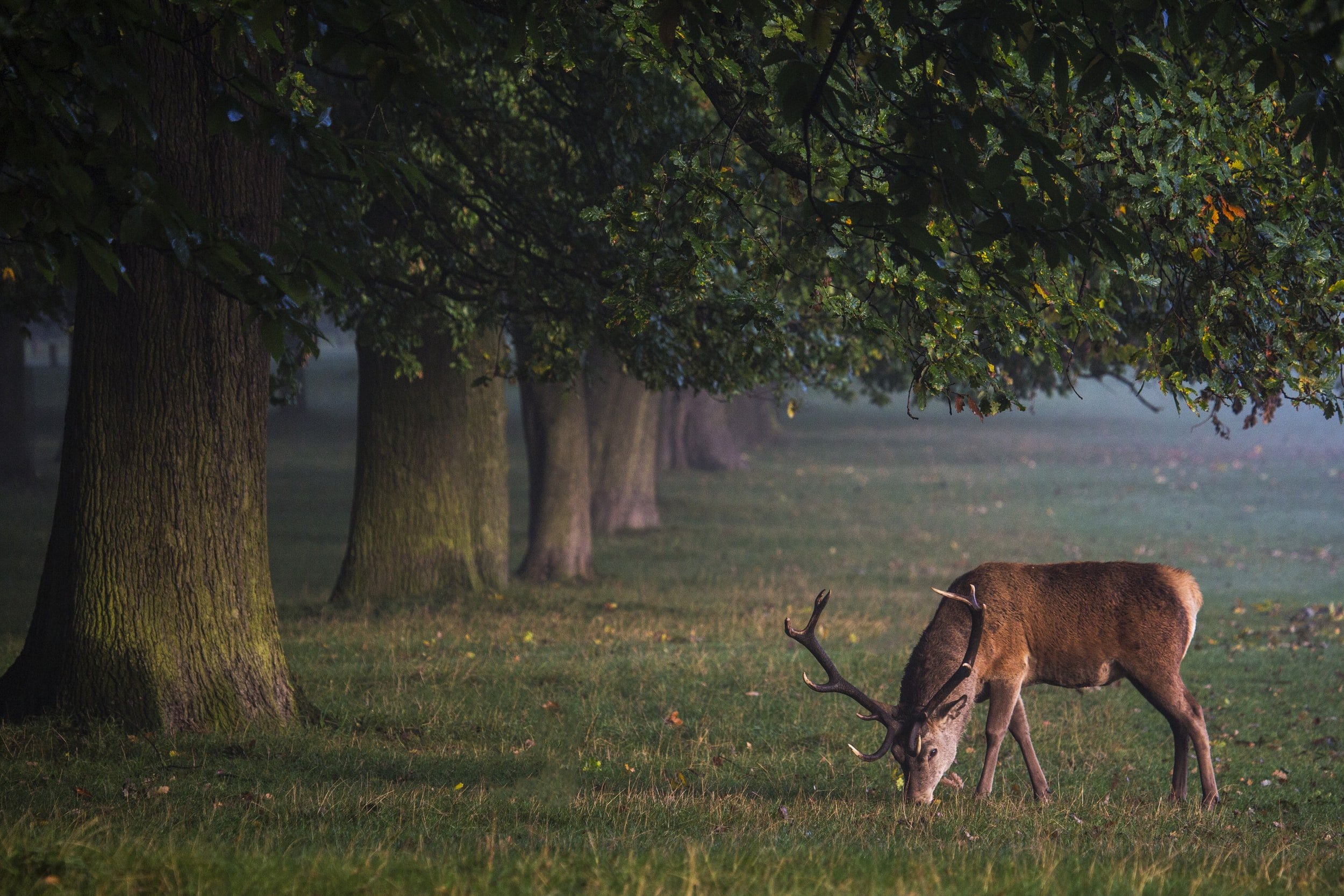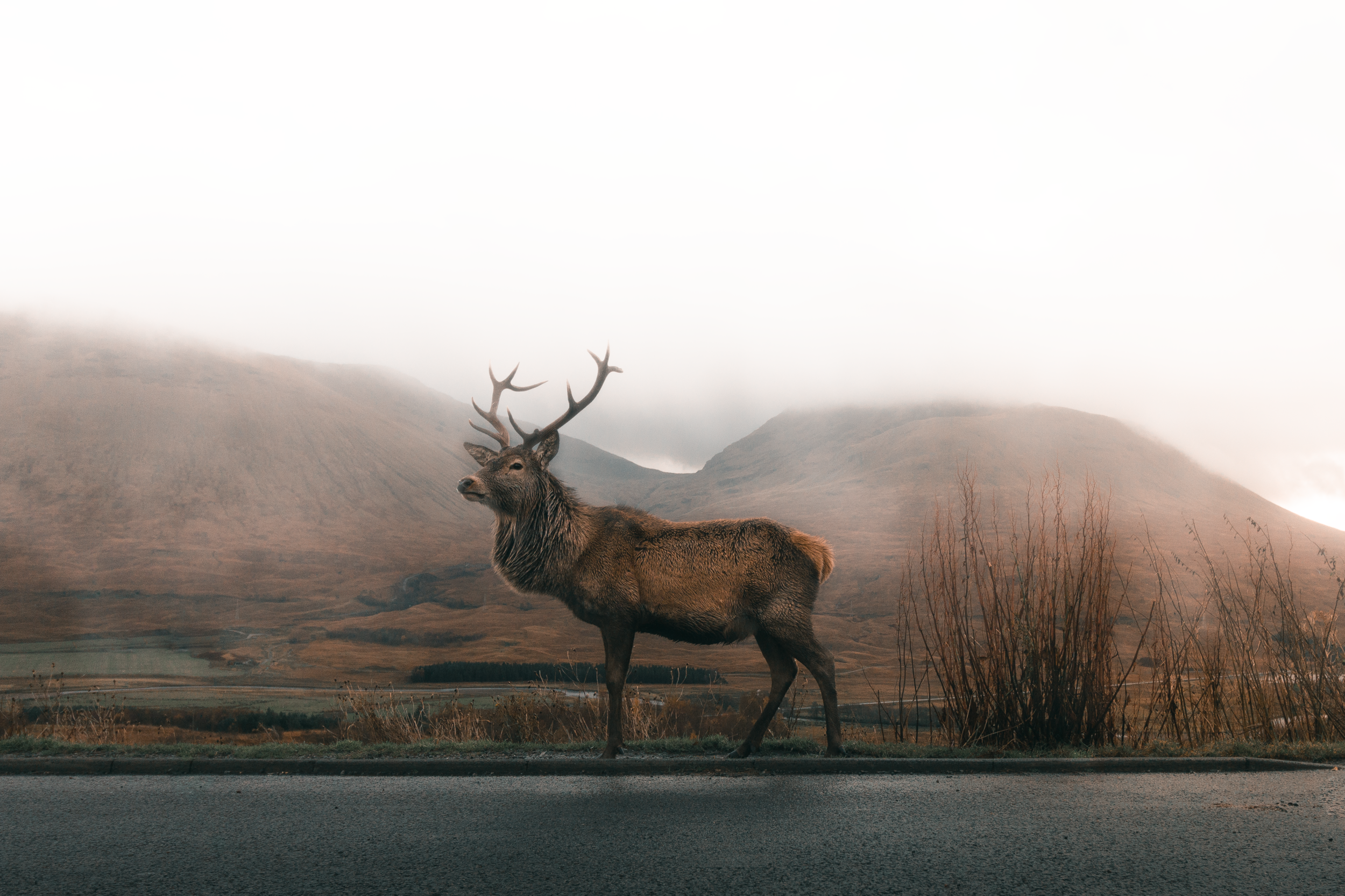
In the UK, we are lucky to have many deer living wild in our countryside. Some would go as far as saying that we were spoiled with six officially recognized wild species, some natives and some not.
Roe deer
Roe deer are native to the UK. They colonized Britain before the separation with the European continent but after many of the western islands had already separated. This is why some Scottish islands on the west coast and Ireland do not have roe.
They are generally present in the same territories throughout the year and do not range as far as herding deer species. They rut mid July to mid August and the does have delayed implantation. This means that they delay the onset of embryonic development from the rut until the winter and give birth to their kids at a similar time to most of the other species. Annual fecundity rates are 1.6 but often less in the Highlands. Their natural lifespan is up to 10 years but typically less.
Roe typically weigh 25 kg but often more. The bucks regrow their antlers through the late winter, unlike most other UK deer species. They have no visible tail but the does have an anal tush (straight tuft of long hairs) that points downwards, making it easy to identify sexes from behind.
They became extinct in most of the U.K. through over hunting and forest removal but replanting of habitat and reintroduction efforts in the Victorian era paid dividends. Roe are now the most common deer species we have.
The roe is still one of the most fun to be involved with, for the deer stalker. The bucks have an open season from 1st April to 31st October, and the does 1st November to 31st March.
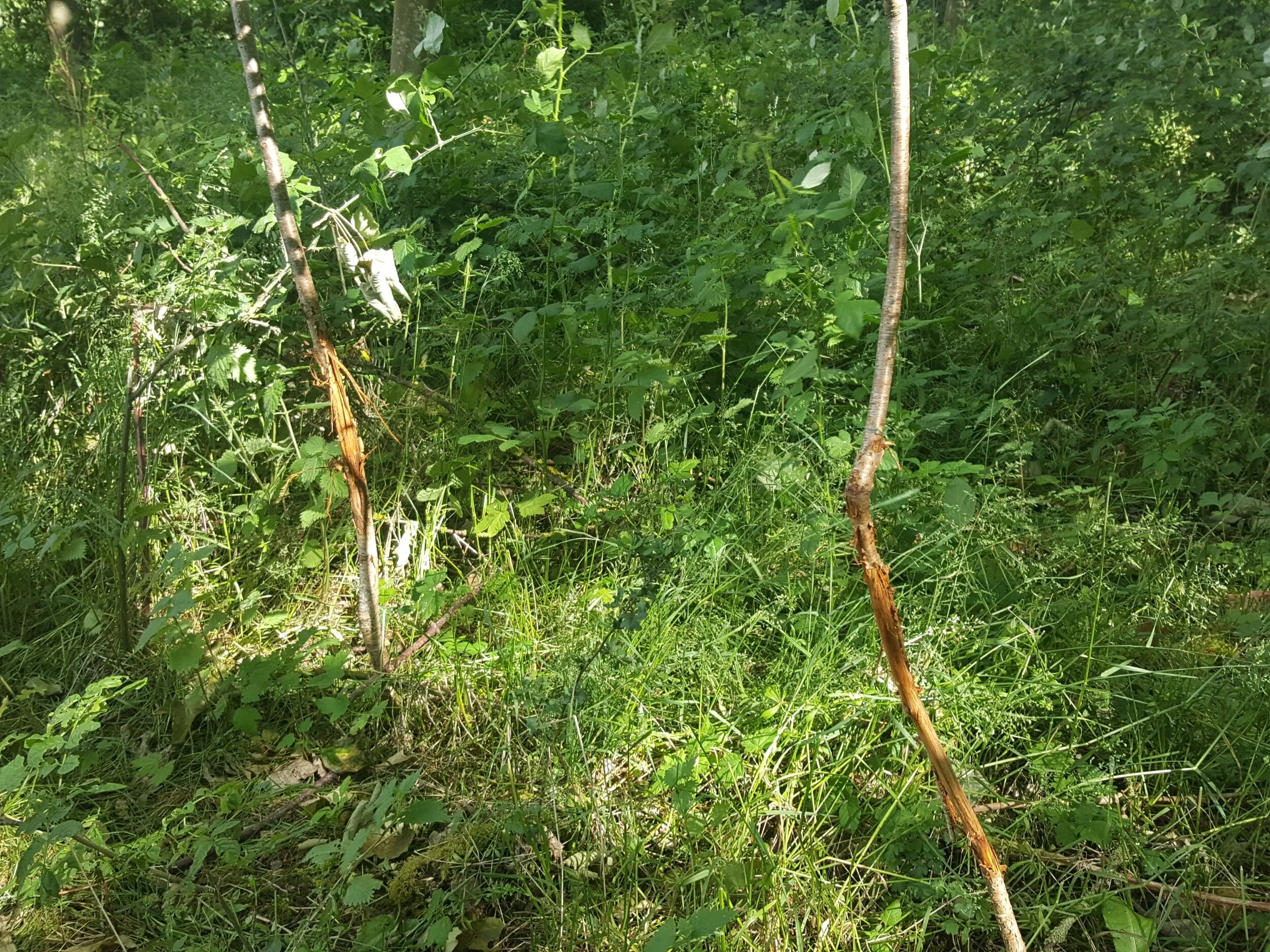
Damage to trees in the spring and summer from the roe bucks cleaning off the velvet from their antlers, and marking their rutting territories.
Muntjac
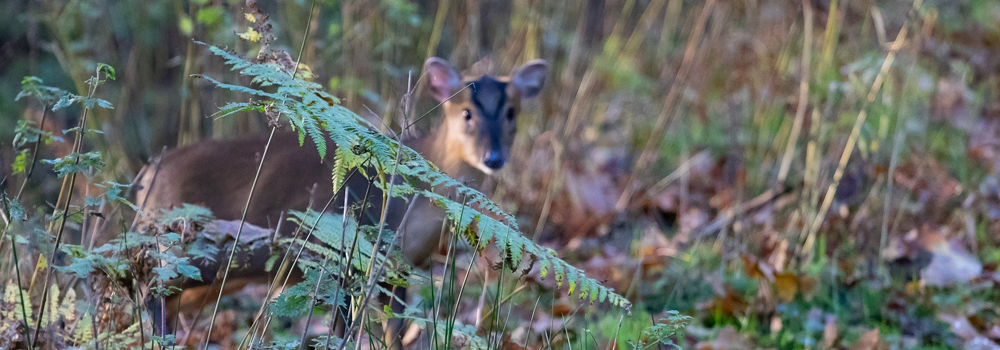
Originally from Asia, Muntjac are a miniature deer species, alien to the UK, escapees from private park collections. They are our smallest deer and have a potential to be (and very often being) damaging to woodlands' undergrowth and young trees. Muntjac are not so much trouble in open ground and arable crops, due to their more secluded and private habits.
The magic muntjac is such a special species : they can be in plain sight and within seconds seemingly disappear without a sound nor rustling of the brash. They often surprise stalkers with close encounters. They are notorious for eating precious woodland flowers like bluebells.
They breed year round and therefore have no closed season. Breeding this quickly means that they can reach too higher densities very rapidly and that means persistent territory marking on tree bark as well as browsing damage. The fawns are sexually active at 7 months old, and the does are nearly always pregnant. It is recommended that the shooting of heavily pregnant does be favored to avoid abandoning dependent offspring. Their typical annual fecundity rate is 1.7.
The bucks can weigh 20 kg and the does a bit less. Sometimes they bark at us like a dog, communicating with us, their fellows and the woodlands, asking questions or telling a story.
“Muntjac are simply as splendid and stealthy as any deer could be. ”
Avoiding issues that arise in association with deer via non-lethal methods, are not a long term solutions. Their numbers are ever increasing. Instead of demonizing shooting folk in the UK, we should be promoting them, bringing new members into deer stalking, promoting more local venison, shooting more deer and praising those that keep a balance for all our wildlife on a daily basis. We should be educating the next generations on responsible countryside management, closing the disconnect in today’s society.
Between species who thrive beyond natural numbers (such as foxes, corvids, pigeons, rabbits…) and those who have a hard time adapting in the modern sculpture of our landscape (like ground nesting birds, pollinators, red squirrels, butterflies…), deer are somewhere in the middle for the most part. They tend to thrive in most of our countryside and the estimated deer population of the UK is the highest it has ever been at any point before, as it is in many other countries and continents.
Deer stalking (or deer hunting for any non UK English speakers) is a thrilling experience and in our core we share the very same emotions, goosebumps, respect and gratitude as our earliest ancestors had. The fact of the matter is being part of this cycle and eating what we have hunted ourselves is such a fulfilling sensation. We know exactly where our food comes from. An article in 3 parts
Discover the last part of our set of article about the deer in the U.K. We have 6 different species of deer in the UK : Fallow deer, Red deer, Sika deer, Muntjac, Chinese water deer and roe deer. Discover more about them, the role of the population management for a sustainable ecosystem of the wildlife and the importance of the genetic problems they face - Read more…
We are lucky to have 6 different species of deer in the UK, this article focuses on the Roe deer and the Muntjac. In this set of article, discover the deer of Britain, some natives and some aliens - Sika deer, Red deer, Chinese water deer, Muntjac, Fallow deer and Roe deer - Read more…
We are lucky to have 6 different species of deer in the UK, some natives and some aliens - Fallow deer, Red deer, Sika deer, Muntjac, Chinese water deer and roe deer. Discover more about them, from the Red deer, iconic mascot of the Scottish Highlands to the magical and discret Muntjac, the role of the population management for a sustainable ecosystem of the wildlife and the importance of the genetic problems they face - Read more…
We love our wildlife and we love our deer. There are so many benefits to working with the fantastic variety of deer we have in the UK. Embracing their presence, learning their behaviors, preserving their habitats and sharing our land with them, is the key to cohabitation.
Discover our day rates for fallow deer stalking outings. We are able to offer beautiful opportunities in our selected woods and estates, according to your trophy goal and the structured management plan. Our prices includes…
Discover our day rates for roe deer stalking outings. Thanks to our reconnaissance work, we are able to offer beautiful opportunities in our selected woods and estates, according to your trophy goal and the structured cull plan. Our prices includes…
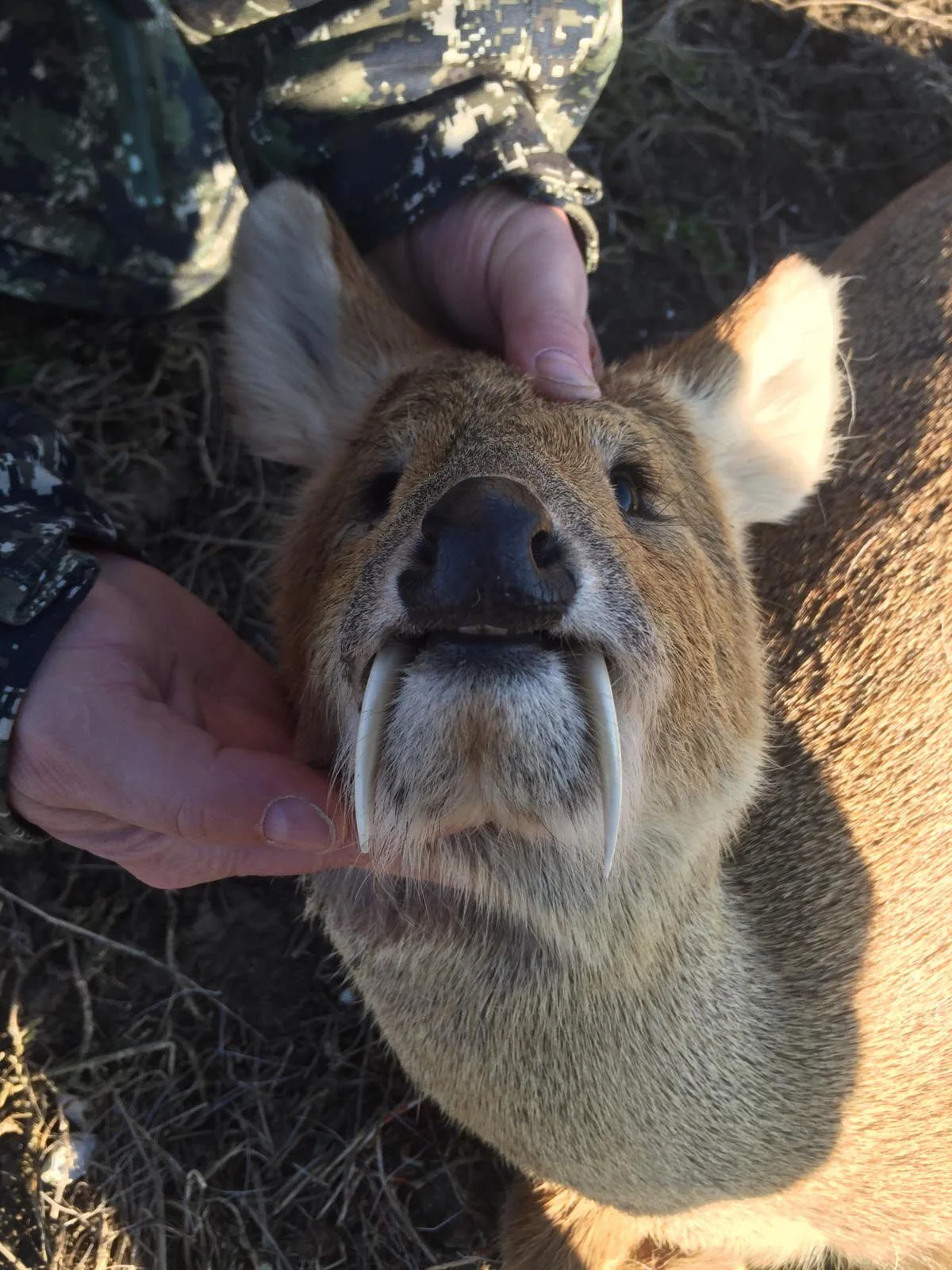
Discover our day rates for chinese water deer (cwd) stalking outings. Thanks to our reconnaissance work in Oxfordshire and Buckinghamshire, we are able to offer beautiful opportunities on our farms, woods and estates. Our prices includes…
Discover our day rates for muntjac stalking outings. Thanks to our reconnaissance work in our area, we are able to offer beautiful opportunities in our selected woods and estates for Oxfordshire and Buckinghamshire. Our prices includes…
Avoiding issues that arise in association with deer via non-lethal methods, are not a long term solutions. Their numbers are ever increasing. Instead of demonizing shooting folk in the UK, we should be promoting them, bringing new members into deer stalking, promoting more local venison, shooting more deer and praising those that keep a balance for all our wildlife on a daily basis. We should be educating the next generations on responsible countryside management, closing the disconnect in today’s society.
Between species who thrive beyond natural numbers (such as foxes, corvids, pigeons, rabbits…) and those who have a hard time adapting in the modern sculpture of our landscape (like ground nesting birds, pollinators, red squirrels, butterflies…), deer are somewhere in the middle for the most part. They tend to thrive in most of our countryside and the estimated deer population of the UK is the highest it has ever been at any point before, as it is in many other countries and continents.
Deer stalking (or deer hunting for any non UK English speakers) is a thrilling experience and in our core we share the very same emotions, goosebumps, respect and gratitude as our earliest ancestors had. The fact of the matter is being part of this cycle and eating what we have hunted ourselves is such a fulfilling sensation. We know exactly where our food comes from. An article in 3 parts
We are excited to keep you updates with our latest news, our blog articles, our competitions and the range of our services, from pigeon shooting to deer stalking. Subscribe to our updates delivered to your inbox.
The Lucky Hunter is organizing a prize draw to win a day outing with Chiltern Sporting on the 16th of December 2021, more details and link to participate bellow
Andrew had come stalking with Chiltern Sporting over a weekend and had learned a lot over a couple of blank sessions. Pleased with the whole experience, they had come again and fortunately for Andrew the tables had turned and we were able to lead him onto a roe buck, which he harvested calmly, in a calculated manner. He kindly left us a few heart warming lines for us to share
Steve is a seasoned hunter and an avid field to fork enthusiast. Last winter season, Steve had come through Chiltern Sporting for a chinese water deer. He had kindly left us a little message to publish, here it is in his own words :
I’ve had the opportunity over the years to shoot with a number of guides for both pigeon shooting/control and also for deer stalking.
Yet I’ve always gone back to Tom and company at Chiltern Sporting for a number of simple reasons - professionalism, knowledge of their quarry, nice guys and the fantastic countryside over which they shoot.
A few months ago, Richard had his first deer stalking experience with one of Chiltern Sporting’s guides, Henry. He happily left review of his experience with us and we are very proud to share it with you. Here is his story told in his own words
Discover our day rates for fallow deer stalking outings. We are able to offer beautiful opportunities in our selected woods and estates, according to your trophy goal and the structured management plan. Our prices includes…